Flattery’s Limits: How Pandering to Trump Undermines Pakistan’s Mediation

Flattery may open doors, but it cannot sustain trust in high-stakes diplomacy. Pakistan’s Trump-centric approach reveals the limits of personality-driven foreign policy.
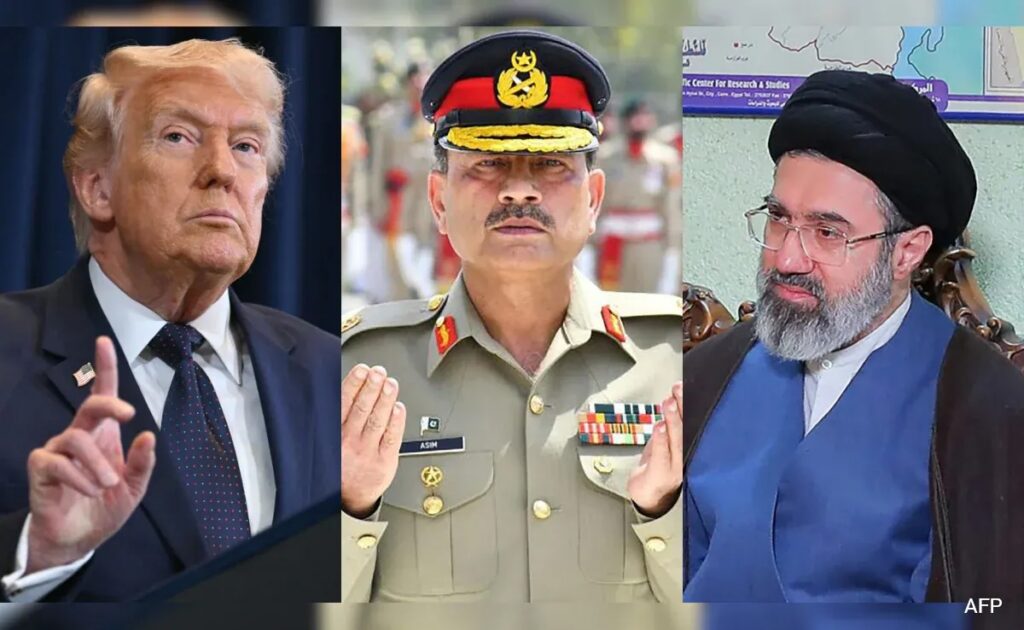
Pakistan’s recent foreign policy under a hybrid regime led by its Field Marshal Asif Munir and Prime Minister Shehbaz Sharif is heavily influenced by a personality-driven dynamic, particularly in its engagement with Donald Trump. As pointed out by Mehdi Hasan, a British-American journalist and political commentator, in an interview with NDTV, Pakistanis have “done a good job of sucking up to Trump,” underscoring a growing reliance on flattery and ego-boosting tactics to remain in Trump’s good books.
When Flattery Becomes a Diplomatic Constraint
From the early phase of Donald Trump’s second term, especially after developments like Operation Sindoor, Pakistan openly credited Trump for ceasefire efforts—something India refrained from doing. Islamabad went further by nominating Trump multiple times for the Nobel Peace Prize. At many international platforms, particularly during the Gaza Board of Peace meeting in Washington and earlier at the Gaza peace summit at Sharm el-Sheikh, Pakistan’s leadership left no stone unturned in praising Trump, with Prime Minister Shehbaz Sharif describing him as a “man of peace” and even a “saviour of South Asia.” Even during recent ceasefire extensions by Trump, Pakistan continued this pattern of excessive praise.
This reflected a calculated strategy: to appeal to Trump’s personality, which is widely perceived as ego-driven and narcissistic. By consistently affirming his self-image and constantly putting messages into his psychological zone of acceptance. Pakistan managed to secure his attention and, to some extent, his favour. Of course, the United States has its own strategic calculations—particularly regarding Iran—but the personal dimension of Trump’s leadership style makes such flattery tactically useful in the short term.
However, this approach is now showing clear limitations, especially in the context of reaching any peace deal with Iran. The very strategy that helped Pakistan gain proximity is now constraining its ability to act as a credible intermediary. Because Islamabad has focused primarily on sending positive, non-confrontational messages to Trump, it appears reluctant—or unable—to convey messages that might irritate or challenge him.
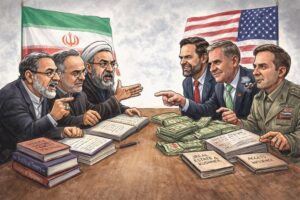
This concern has been explicitly raised by Iranian voices. Iranian analysts and officials have questioned whether Pakistan is genuinely transmitting Tehran’s positions to Washington. One such voice, Iranian lawmaker Ebrahim Rezaei, pointed out that Pakistan is no longer seen as a neutral mediator. According to him, Islamabad selectively communicates, prioritising Trump’s preferences over balanced diplomacy. He stated that Pakistan “lacks the necessary credibility” and “always takes Trump’s ego into account and does not say a word against his wishes,” underscoring a growing perception that its role as an intermediary is increasingly compromised.
Importantly, the United States now appears to be echoing similar concerns. A CNN report published on May 12, 2026, titled “Trump increasingly considers resuming large-scale military action against Iran,” stated that many Trump administration officials believed Pakistan had been sharing “a more positive version of the Iranian position with the US than what reflects reality,” while also questioning whether Islamabad was “aggressively conveying Trump’s displeasure” to Tehran. Significantly, an earlier CNN report published on May 6, 2026, titled “US and Iran closing in on memorandum aimed at ending war, source says,” had already hinted at scepticism inside the White House, noting that Pakistani mediators were presenting an optimistic assessment of Iranian flexibility that some US officials did not fully share.
This is the core psychological flaw in a personality-centric foreign policy. When diplomacy is personalised to accommodate one man’s ego, it is bound to hinder strategic flexibility. Mediators must be in a position to deliver awkward truths and dissenting opinions. But when a state is afraid to upset a leader like Trump, it starts filtering messages, putting them into what can be called the ‘zone of psychological acceptance.’ Anything outside that zone is open to suppression.
Erosion of Trust and Mediation Credibility
As a result, trust erodes. Iran’s scepticism about Pakistan’s neutrality is not incidental—it is a direct consequence of this ego-management strategy. Even technical issues, such as disagreements over the scope of ceasefire agreements—for example, whether regions like Lebanon were included when the initial ceasefire between the United States and Iran was reached—became points of contention because communication was filtered, biased, and incomplete. This then became a major point of contention, with Iran maintaining that Lebanon formed part of the ceasefire framework, while the United States rejected this interpretation, deepening mistrust and reinforcing perceptions of inconsistency in how the agreement was conveyed. As Ebrahim Rezaei further said, “They are unwilling to tell the world that America first accepted Pakistan’s proposal but then went back on its word. They do not say that the Americans had commitments regarding Lebanon or the blocked assets, but that they failed to fulfil them. A mediator must be impartial, not always leaning to one side.”
In the long run, such a policy is unsustainable. Personality-driven diplomacy may yield short-term visibility and tactical gains, but it weakens institutional credibility. Relationships built around individuals rather than enduring interests and institutions tend to fade with political transitions. When leadership changes in Washington, Pakistan may once again find itself marginalised, having invested too heavily in a single personality rather than in a broader strategic framework.
As Pakistani security analyst and president of the Pakistan Institute for Peace Studies, Muhammad Amir Rana, warned in his February 1, 2026, article “Pakistan’s Trump Test” published in Dawn, “The post-Trump phase will test Pakistan’s diplomacy and political leadership,” while also questioning “how far the country can maintain its relevance” once Trump exits the political stage. Rana further argued that Pakistan’s current diplomatic positioning is too closely tied to a “Trump-endorsed defence equation” and cautioned that, without developing “alternative strategic options,” Islamabad could face increasing diplomatic marginalisation in the future. These concerns reinforce the broader perception that Pakistan’s recent diplomatic gains are heavily dependent on Trump-era political dynamics rather than on durable institutional and bipartisan foundations in Washington.
Playing to a leader’s ego can open doors, but it also shrinks the space for honest diplomacy. Pakistan’s experience suggests that an over-reliance on psychological appeasement in foreign policy can compromise both credibility and effectiveness in complex negotiations. As also noted by American psychologist Michael Maccoby in his book, “The Productive Narcissist: The Promise and Peril of Visionary Leadership,” leaders with strong narcissistic traits may initially respond positively to admiration and validation. However, their effectiveness tends to decline over time as underlying behavioural patterns become more visible. In such contexts, strategies based on flattery and ego management may generate short-term gains but ultimately constrain credibility and weaken long-term influence.